
Marketing vs. Listing: Why Strategic Property Marketing Matters in Commercial Real Estate

If you’re considering selling or leasing a commercial property, one of the most important questions you can ask a broker is, “How will you market my property?” Surprisingly, many property owners assume that marketing begins and ends with placing a listing online, installing a sign, and waiting for inquiries to arrive. While those activities are certainly part of the process, they represent only a small portion of what effective commercial real estate marketing should entail.
The reality is that there is a significant difference between simply listing a property and strategically marketing it. A listing creates visibility, but marketing creates demand. In today’s competitive commercial real estate environment, generating demand is often what separates an average result from an exceptional one.
Many commercial properties receive what could best be described as passive exposure. A broker or their support staff uploads the property to a website, places it on several listing platforms, installs a sign, and waits for calls, emails, or website inquiries. While this approach may occasionally produce results, it relies heavily on prospects finding the property on their own. In essence, it assumes that the right buyer or tenant is actively searching at exactly the right time and happens to come across the listing.

Effective marketing takes a much different approach. Rather than waiting for opportunities to appear, it focuses on proactively creating them. Strategic marketing begins by identifying what makes a property unique and determining how it should be positioned in the marketplace. Every property has a story to tell, and successful marketing communicates that story to the right audience at the right time.
One of the most common shortcomings of listing-only marketing is that it treats every property the same. The property is uploaded to a handful of websites, assigned a generic description, and left to compete with hundreds of similar listings. While this may generate some exposure, it rarely creates excitement or urgency among prospective buyers and tenants.
The result is often slower activity, fewer inquiries, less competition, and ultimately weaker outcomes for property owners. Simply being visible in the marketplace is no longer enough. Today’s commercial real estate environment requires a proactive strategy designed to attract attention and create engagement.
Many commercial properties are marketed using the same basic formula: square footage, parking counts, building features, and location. While those details are important, they don’t explain why someone should choose one property over another.
Strong marketing starts with positioning. An office building may offer a unique headquarters opportunity. An industrial facility may provide superior logistical advantages. A retail center may benefit from exceptional demographics and consumer traffic. The goal is to identify what makes a property stand out and build a narrative around those advantages.
When buyers and tenants understand the opportunity—not just the specifications—they are more likely to engage.
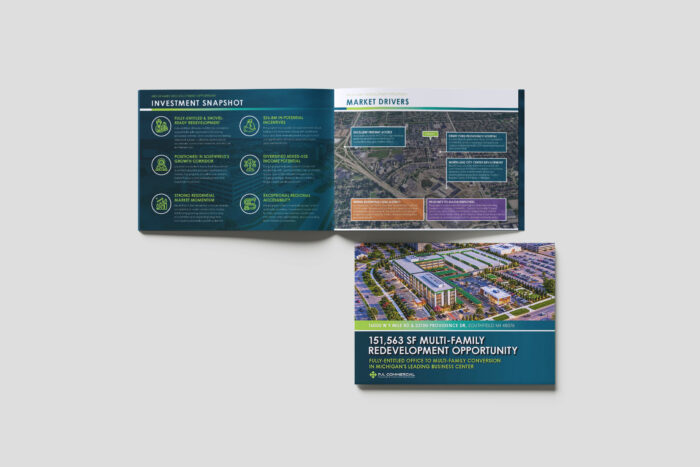
Long before a prospect schedules a tour, they have already formed an opinion about the property based on its marketing materials.
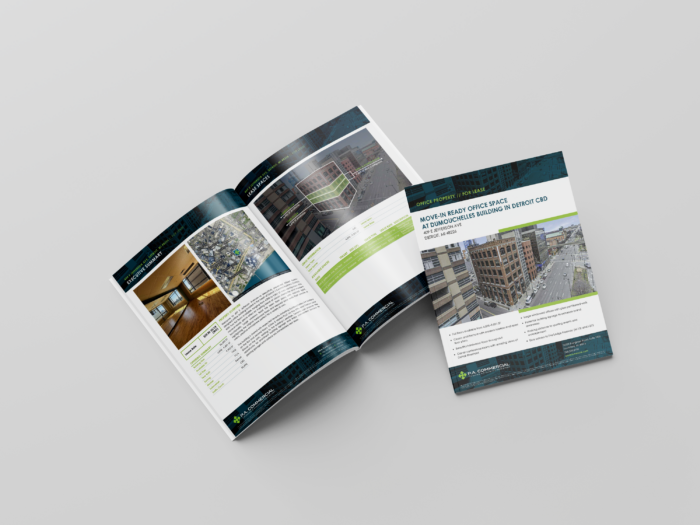
Professional photography, drone imagery, offering memorandums, brochures, floor plans, and digital presentations all contribute to how a property is perceived. High-quality marketing materials create confidence and reinforce value, while outdated flyers, poor photography, or generic presentations can have the opposite effect.
In commercial real estate, perception matters. The quality of the marketing often influences the quality of the leads.
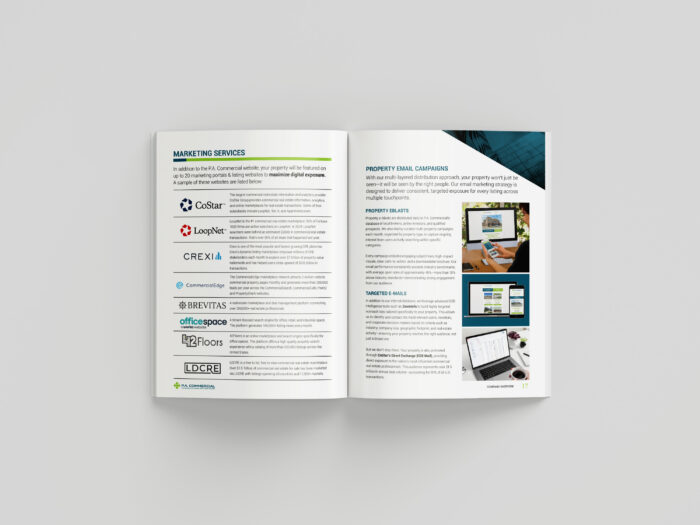
Many brokers rely primarily on listing platforms to generate activity. While platforms such as CoStar, LoopNet, and Crexi are important tools, they should be viewed as one component of a larger marketing strategy rather than the entire strategy itself.
The reality is that some of the most qualified buyers and tenants are not actively searching listing websites every day. Effective marketing requires reaching prospects where they are through targeted outreach, direct communication, email campaigns, social media promotion, and industry relationships.
The best opportunities are often created—not discovered.

One of the biggest differences between listing and marketing is what happens after the property goes live.
Effective marketing includes proactive outreach to brokers, investors, owner-users, developers, and business leaders who may be interested in the opportunity. It also requires consistent follow-up with prospects who have expressed interest.

Many deals are not completed after the first phone call or email. They are the result of multiple conversations, continued engagement, and timely follow-up. Without a system for managing and nurturing leads, valuable opportunities can easily be lost.
At P.A. Commercial, we believe every property deserves a customized marketing strategy designed around its specific strengths, target audience, and goals. Our marketing approach typically includes:
Rather than relying solely on passive exposure, our goal is to create a comprehensive campaign that generates awareness, engagement, and qualified opportunities.
Marketing should never be a mystery. Property owners deserve transparency regarding how their property is performing in the marketplace. That’s why performance tracking is an important part of our process.
By monitoring listing views, inquiries, email campaign results, showing activity, prospect engagement, and lead generation metrics, we can evaluate what’s working, make strategic adjustments, and keep clients informed throughout the assignment.
A broker should be able to show evidence of activity—not simply promise that marketing is occurring.

Before hiring a commercial real estate broker, ask the following questions:
A broker who is actively marketing properties should be able to answer each of these questions clearly and confidently.
The difference between listing and marketing is simple: a listing creates visibility, while marketing creates demand.
In today’s competitive marketplace, successful outcomes require more than a sign, a listing, and hope. They require a thoughtful strategy, professional presentation, targeted outreach, measurable results, and ongoing execution.
At P.A. Commercial, we believe properties deserve more than exposure—they deserve a marketing strategy designed to maximize opportunities and drive results.